What is a side loader trailer? Container side lifter design and specifications
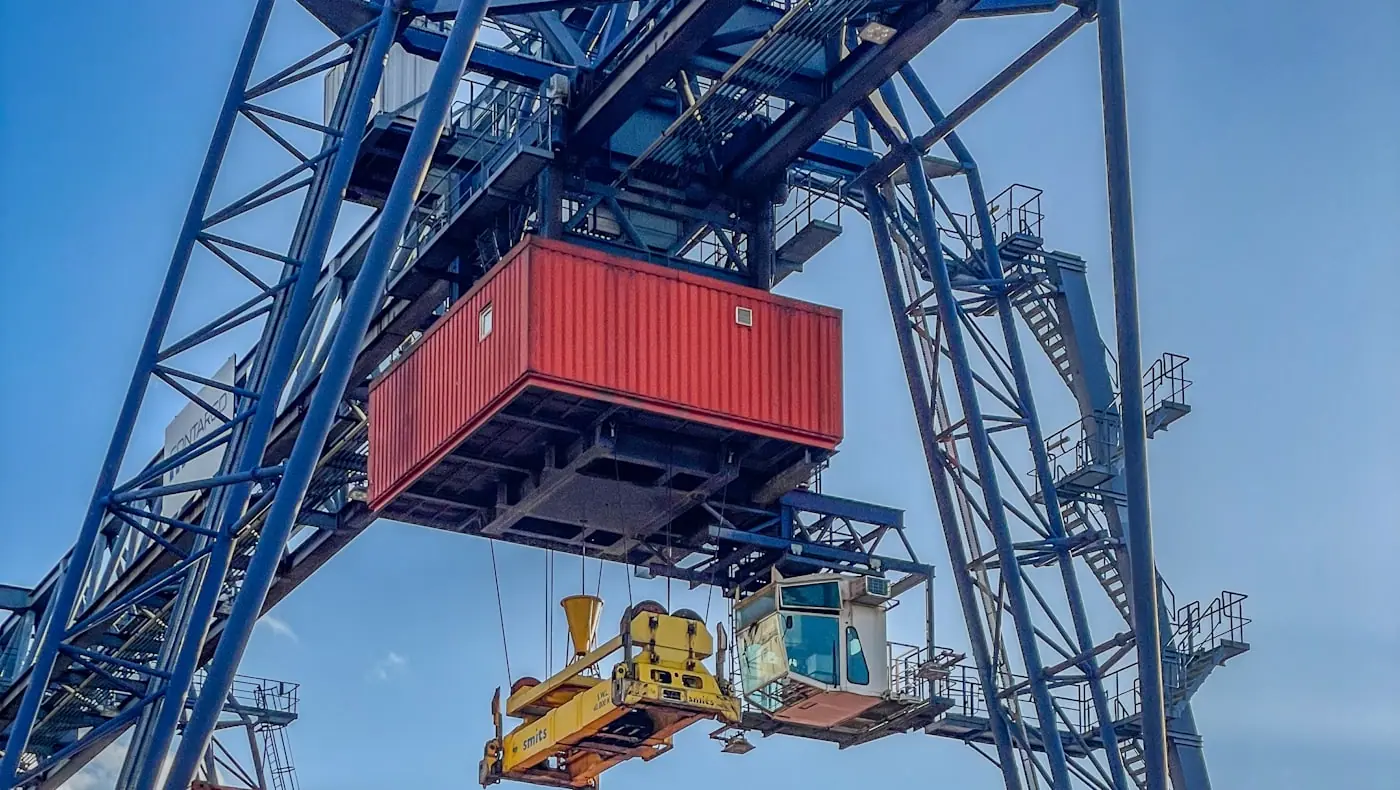
A side loader trailer — also called a container side lifter or sidelifter — is a semi-trailer with two hydraulic cranes that lift a shipping container from ground level onto its own deck, or from the deck to the ground. It removes the need for a forklift, reach stacker or yard crane at either end of the run.
For buyers moving containers to sites without lifting equipment — rural depots, mine camps, construction sites, farms — the sidelifter is often the difference between a viable delivery and an impossible one. This guide covers how they work, the main types, what to check on the specification, and the questions we get asked most often.
How it works
Two hydraulic cranes are mounted at the front and rear of the trailer deck. Stabiliser legs deploy on the working side and take the load off the suspension. The cranes lower their chains or spreader arms, lock into the container’s corner castings, lift, swing over the deck, and set down.
- Position the trailer parallel to the container, on ground that will take the stabiliser load
- Deploy the four stabiliser legs and level the trailer
- Lower both cranes and engage the container corner castings
- Lift, transfer over the deck, and lower onto the twist locks
- Retract the legs, secure the twist locks, and drive away
Main types
Sidelifters differ mainly in lifting capacity and in how the hydraulics are driven. The three configurations we source most often:
| Type | Capacity | Typical use |
|---|---|---|
| Standard 20ft | 20–24 t | Single 20ft boxes, urban depot work |
| Heavy duty 20/40ft | 32–37 t | Loaded 40ft boxes, mine and site delivery |
| Extendable frame | 32–37 t | Mixed 20ft and 40ft fleets on one trailer |
Design features to check
- Crane capacity at radius — headline capacity is measured at minimum radius. Ask for the figure at working radius, which is the number that matters
- Stabiliser footprint — narrow feet sink into unpaved ground. Check the plate size and whether spreader pads are included
- Hydraulic drive — engine-driven hydraulics work independently of the tractor; PTO drive is cheaper but ties you to a specific tractor
- Chain versus spreader — chains are cheaper and more tolerant of misalignment; spreader arms are faster and gentler on the container
- Frame steel — Q345B or better under the crane mounts, with full-penetration welds
- Controls — remote control is standard on newer units and worth having; it lets one operator see both ends of the lift
If the quotation does not state crane capacity at working radius, it is not a specification — it is a headline. Ask before you compare prices.
What it can lift, in practice
A 37-tonne sidelifter will handle a fully loaded 20ft box and most loaded 40ft boxes within legal road limits. It will not lift a 40ft box loaded to its own maximum gross — no sidelifter will, and any supplier who says otherwise is quoting the crane’s theoretical figure rather than the working one.
Frequently asked questions
Can one operator run a sidelifter alone?
Yes, with remote control, on level ground. On uneven ground or in traffic, a second person watching the off-side is worth the wage.
Does it need a special tractor head?
A standard 6×4 tractor head is sufficient for the road work. If the hydraulics are PTO-driven, the tractor needs the matching PTO — which is why we usually recommend engine-driven hydraulics for export orders.
New or used?
Sidelifter hydraulics are the wear point. On used units we check cylinder creep, hose condition, chain wear and the crane mount welds, and we report what we find — including when the answer is that the unit is not worth shipping.